A large thyroglossal duct cyst causing difficulty swallowing and neck discomfort was successfully treated using the Sistrunk procedure. Following one week of treatment and postoperative care, the patient recovered well and was discharged in stable condition.
Hoan My Vinh Hospital recently performed successful surgery on a patient with a complex thyroglossal duct cyst. The patient, Mr. Nguyen Dac D., aged 51, is from Nghe An Province.
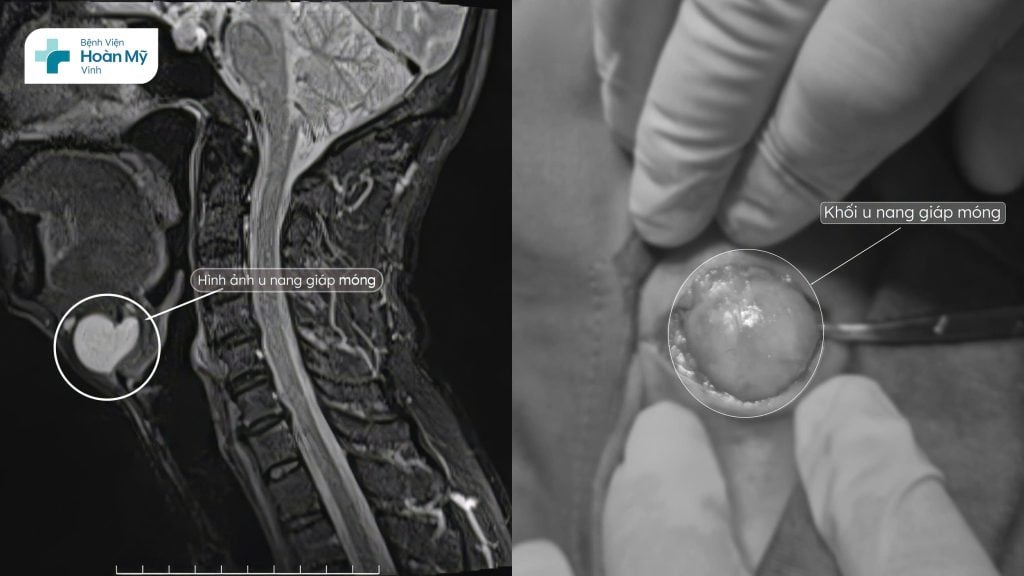
The patient presented with difficulty swallowing and discomfort in the neck. Following clinical examination and magnetic resonance imaging (MRI), the medical team identified a large thyroglossal duct cyst measuring 25 × 20 × 22 mm. Given the complexity of the case, surgical intervention was indicated.
After assessing the patient’s condition, the medical team recommended surgery using the Sistrunk procedure. The operation lasted approximately three hours and was performed by Dr. Hoang Duc Huy, Specialist Level II, in collaboration with the surgical and anesthesia teams.
Following surgery, the patient received postoperative monitoring, care, and medical treatment as prescribed. After one week, his condition had stabilized, and he was deemed fit for discharge.
Thyroglossal Duct Cysts: A Congenital Condition Requiring Appropriate Diagnosis and Treatment
A thyroglossal duct cyst is a congenital anomaly that develops when the thyroglossal duct fails to completely involute during embryonic development. The cyst typically appears along the midline of the neck and may move when the patient swallows or protrudes the tongue.
As the cyst enlarges or becomes infected, patients may experience neck swelling, pain, and difficulty swallowing. In particular, large cysts may also affect the airway.
The Sistrunk Procedure – A Common Surgical Approach to Treating Thyroglossal Duct Cysts
The Sistrunk procedure is a commonly selected surgical approach for treating thyroglossal duct cysts. The technique involves removing the cyst, the thyroglossal tract, and the associated central portion of the hyoid bone. This approach helps reduce the risk of recurrence compared with simple cyst excision alone.
Doctors recommend that anyone who notices an abnormal lump in the neck, particularly one located along the midline or that moves during swallowing or tongue protrusion, should seek medical attention for examination, diagnosis, and appropriate treatment advice.
Meningococcal disease is a serious infectious disease that can progress rapidly and become life-threatening within a short period. Recognizing warning signs early, seeking prompt medical attention, and proactively vaccinating children are important measures to help protect their health. 1. What Is Meningococcal Disease? Meningococcal disease is caused by the bacterium Neisseria meningitidis (meningococcus). This bacterium […]
Following a sports injury, one of the most common concerns among athletes and active individuals is not only whether surgery is necessary, but also how long recovery will take and whether they will be able to return to their previous level of performance. Orthopedic Trauma specialists at Hoan My Vinh Hospital share three important factors […]
Through the effective combination of highly skilled physicians, extensive clinical experience, and advanced medical technology, Hoan My Vinh Hospital has successfully identified numerous gastrointestinal lesions at very early stages. Early detection not only improves treatment outcomes but also reduces healthcare costs and alleviates the psychological burden on patients. Detecting Disease Early Despite Vague Symptoms Clinical […]
On February 6, Hoan My Vinh Hospital received a 4-year-old patient (T.A., from Hung Nguyen District) who was brought to the hospital after accidentally swallowing a foreign object. According to the child’s family, about 30 minutes before arriving at the hospital, the child was playing with a key and accidentally swallowed it. After noticing the incident, the family immediately took the child to […]
By clicking "Accept All", you consent to the storage of cookies on your device to enhance site navigation, analyze site usage, and assist in our marketing efforts.












 60-60A Phan Xich Long Street, Cau Kieu Ward, Ho Chi Minh City


 28/1 Binh Phuoc B Quarter, An Phu Ward, Ho Chi Minh City
 Open 24 hours

 18 Binh Duong Boulevard, Binh Hoa Ward, Ho Chi Minh City
 Monday to Saturday 07:30 - 16:30. Emergency: 24/7