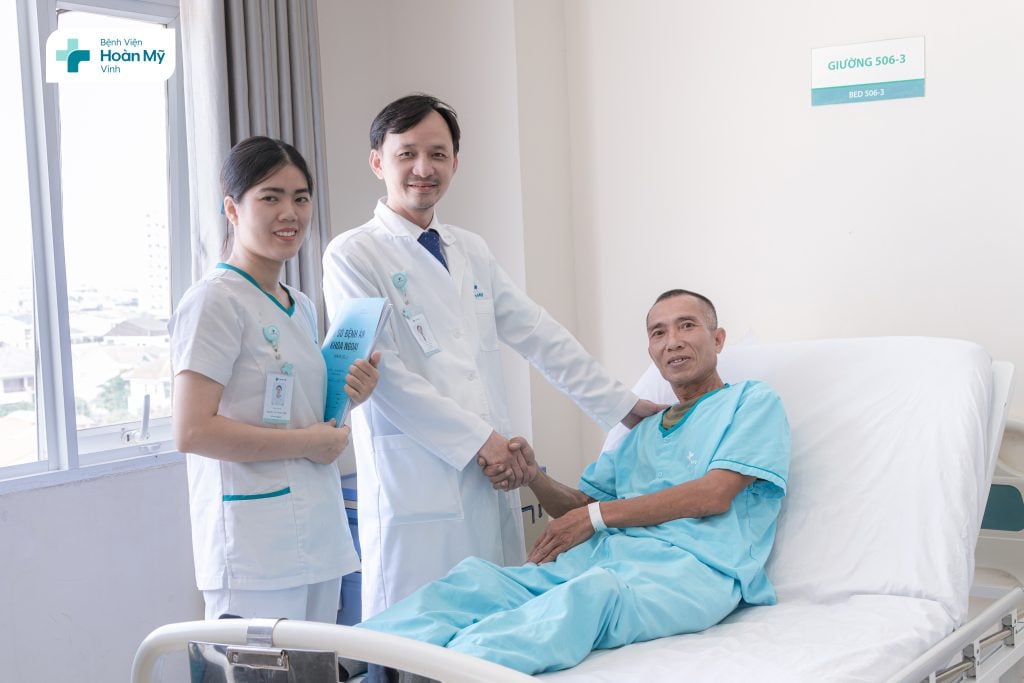
Hoan My Vinh Hospital recently treated Mr. Uong Van Kh. (57, from Ha Tinh Province), who presented with a large bulge in the left groin extending into the scrotum, causing significant scrotal enlargement. Following a clinical examination and the necessary diagnostic investigations, he was diagnosed with a left inguinal hernia and underwent surgery.
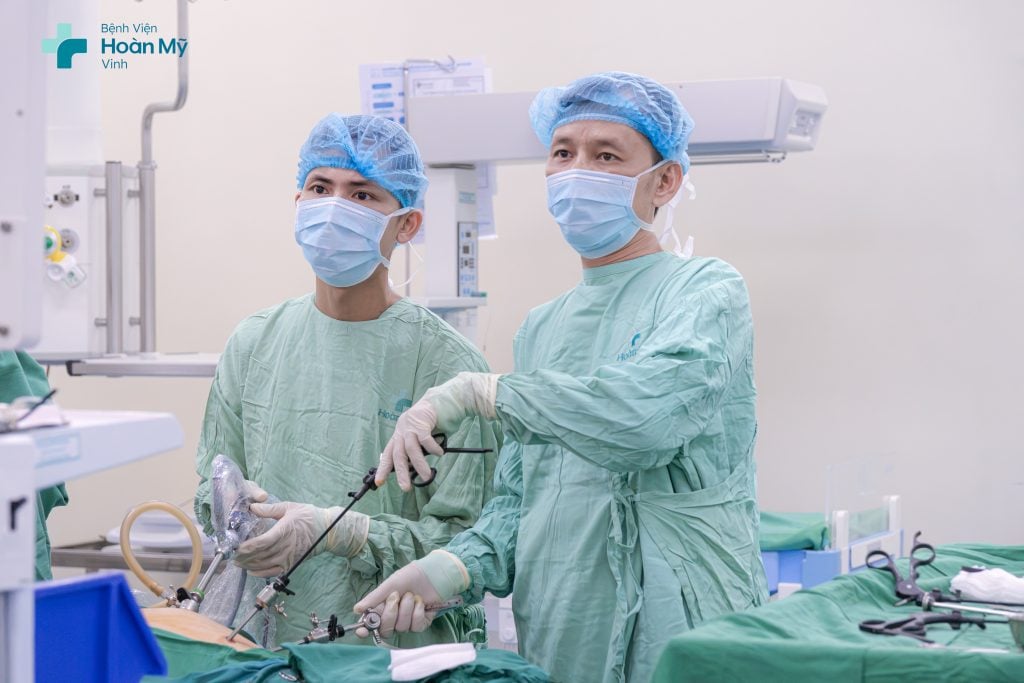
Dr. Vo Xuan Thanh from the Department of Surgery at Hoan My Vinh Hospital and his surgical team performed laparoscopic totally extraperitoneal (TEP) hernia repair using a synthetic mesh to reinforce the abdominal wall at the hernia site.
Minimally invasive surgery uses small incisions to reduce tissue trauma, lower post-op pain, and speed up recovery
Laparoscopic surgery involves small skin incisions, helping minimize tissue trauma, reduce postoperative pain, and support early recovery. The synthetic mesh reinforces the weakened area of the abdominal wall, helping reduce the risk of hernia recurrence at the treated site.
Large Inguinal Hernias: Do Not Ignore a Bulge That Gradually Enlarges or Extends into the Scrotum
An inguinal hernia occurs when a portion of the intestine or abdominal fatty tissue protrudes through a weak area in the groin, forming a visible or palpable bulge. This happens when the abdominal wall is not strong enough to keep the internal tissues and organs in their normal positions.
Dr. Vo Xuan Thanh advises patients not to underestimate an inguinal hernia simply because the bulge is not yet causing significant pain. If the bulge gradually enlarges, causes discomfort, or extends into the scrotum, patients should seek medical evaluation to assess the condition and receive advice on appropriate treatment options.
Laparoscopic surgery, performed through small skin incisions, minimizes tissue damage, helps reduce postoperative pain, and promotes early patient recovery
Incarcerated hernia is a potentially dangerous complication that occurs when the herniated tissue becomes trapped outside the abdominal cavity and cannot return to its normal position, potentially compromising its blood supply. Without timely emergency treatment, the affected portion of the intestine may become ischemic and develop tissue necrosis, potentially leading to peritonitis and becoming life-threatening.
Patients should seek emergency medical care immediately if the groin bulge suddenly becomes severely painful, tense or hard, cannot be pushed back into the abdominal cavity, or is accompanied by vomiting. Do not attempt to manage these symptoms at home or delay seeking medical attention. Early detection and appropriate treatment help reduce the risk of complications, protect patients’ health, and support their quality of life.
By clicking "Accept All", you consent to the storage of cookies on your device to enhance site navigation, analyze site usage, and assist in our marketing efforts.






 60-60A Phan Xich Long Street, Cau Kieu Ward, Ho Chi Minh City
 Open 24 hours

 28/1 Binh Phuoc B Quarter, An Phu Ward, Ho Chi Minh City
 Open 24 hours

 245 Phan Xich Long Street, Cau Kieu Ward, Ho Chi Minh City
 Monday to Saturday | 07:00 - 16:00

 18 Binh Duong Boulevard, Binh Hoa Ward, Ho Chi Minh City
 Monday to Saturday 07:30 - 16:30. Emergency: 24/7