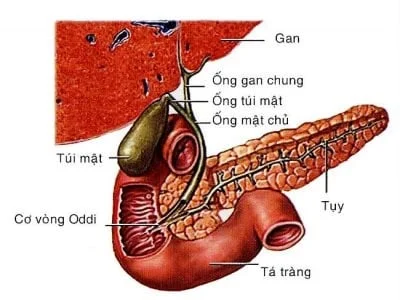
Gallstones are solid crystals that form in the gallbladder due to an imbalance in the components of bile. They vary in size, and large stones can block the natural flow of bile, leading to serious health problems. Some conditions associated with gallstones include acute or chronic cholecystitis (inflammation of the gallbladder), gallbladder perforation, and in some cases, gallbladder cancer.
Gallstones may develop for many reasons, including:
Formed when there is a high concentration of cholesterol or bilirubin in bile
Develop when the gallbladder does not secrete enough bile
Occur in people with cirrhosis or blood disorders
During pregnancy
When losing weight rapidly
WHAT ARE THE SYMPTOMS OF GALLSTONES?
Depending on the stage of the disease, gallstones may present with typical symptoms:
When a stone becomes stuck in the neck of the gallbladder causing obstruction, the gallbladder becomes distended and the patient feels pain.
Pain shifts to the right side, below the rib margin. The pain gradually increases, changing from intermittent pain to continuous pain. It may radiate to the back and to the right shoulder
Patients often experience chills, fever, and nausea.
The painful area may spread to half of the abdomen. The larger the stone, the more severe the pain. Infection becomes more serious if not treated promptly, and the patient may develop high fever and severe fatigue.
The disease commonly occurs in women aged 40 and over, obese individuals, women with many pregnancies, those using contraceptive pills or cholesterol-increasing medications, patients with Crohn’s disease, those who have had a large portion of the ileum removed, and people with hyperlipidemia. The gallbladder is prone to stone formation because its lining absorbs bile salts, and its storage function easily leads to bile stagnation.
WHAT COMPLICATIONS CAN GALLSTONES CAUSE?
If not detected and treated early, gallstones can cause serious complications such as:
Acute cholecystitis (inflammation of the gallbladder) due to stones stuck in the neck or cystic duct
Cholangitis (serious infection and inflammation of the bile ducts) caused by gallstones falling into the common bile duct and obstructing bile flow
Acute pancreatitis caused by gallstones falling into the common bile duct and becoming lodged at its distal part, blocking both the bile duct and pancreatic duct
Gallbladder cancer related to large gallstones (over 25 mm) or gallstones associated with gallbladder polyps
METHODS FOR DIAGNOSING GALLSTONES
Blood tests: help detect signs of infection, cholangitis, pancreatitis, cholecystitis, hepatitis, etc.
Abdominal ultrasound: currently considered the first-line method for diagnosing gallstones, with an accuracy of 90–95%
Computed tomography (CT) and magnetic resonance imaging (MRI): may be used in suspected cases when ultrasound cannot provide a definite diagnosis
Magnetic resonance imaging (MRI): creates detailed images of organs and soft tissues to help detect gallstones in the bile ducts
METHODS FOR TREATING GALLSTONES
Currently, there are two treatment methods for gallstones: surgical and non-surgical.
Non-surgical treatment: A procedure to create a percutaneous transhepatic tract, insert instruments through this tract to perform extracorporeal shock wave lithotripsy to dissolve the stones and remove them through the skin. The effectiveness of these methods is not high and depends on the type of stone, stone size, and bile duct anatomy.
Surgical treatment: Definitive treatment by laparoscopic or open cholecystectomy (gallbladder removal).
Endoscopic retrograde cholangiopancreatography (ERCP): ERCP is often combined with gastroscopy and X-ray imaging to diagnose and treat diseases related to the bile ducts and pancreas, and to remove gallstones.
DOES GALLBLADDER REMOVAL HAVE ANY EFFECT?
After gallbladder removal, patients do not need to take additional digestive support medications because the liver still secretes sufficient bile. A small number of patients may experience indigestion with fatty foods and eggs. Therefore, after surgery, it is best to limit foods high in fat and eggs for about three months to allow the body to adjust its bile storage. Very few patients have diarrhea after surgery, and this symptom usually resolves on its own after a few weeks.
HOW TO PREVENT GALLSTONES
To prevent gallstones, a proper diet is needed:
Eat more fiber-rich foods such as fruits, green vegetables, legumes, and whole grains (brown rice, oats, etc.)
Limit foods high in sugar and refined carbohydrates
Eat foods rich in healthy fats such as fish oil and olive oil to support stable gallbladder contraction
Avoid foods containing unhealthy fats such as fried foods and desserts
Share
Hoan My Hospital Network
Hoan My Minh Hai Hospital
Address: 09 Lac Long Quan Street, Quarter 29, Tan Thanh Ward, Ca Mau province
phone: 0290 3575 859
email: [email protected]
Doctors at Hoan My Minh Hai Hospital have successfully performed surgery to treat fungal sinusitis for patient T.T.K (73 years old, residing in Khanh Binh Dong Commune, Tran Van Thoi District, Ca Mau Province). This was a particularly complex case as the patient had a history of multiple cardiovascular conditions and had undergone treatment at […]
Every day brings joy and anticipation as parents look forward to meeting their little one. Every ultrasound image and every tiny kick is a promise, a hopeful sign of a happy and complete home. However, preparing for childbirth is not always easy. Understanding this, Hoan My Minh Hai Hospital has launched the “All-Inclusive Birth Care” […]
By clicking "Accept All", you consent to the storage of cookies on your device to enhance site navigation, analyze site usage, and assist in our marketing efforts.










 60-60A Phan Xich Long Street, Cau Kieu Ward, Ho Chi Minh City
 Open 24 hours
 245 Phan Xich Long Street, Cau Kieu Ward, Ho Chi Minh City
 Monday to Saturday | 07:00 - 16:00
 18 Binh Duong Boulevard, Binh Hoa Ward, Ho Chi Minh City
 Monday to Saturday 07:30 - 16:30
 F99 Vo Thi Sau Street, Tran Bien Ward, Dong Nai province
 Open 24 hours