Coronary Artery Stenting Saves the Life of an Indian Tourist with Acute Myocardial Infarction in Da Nang
Article Table of Contents
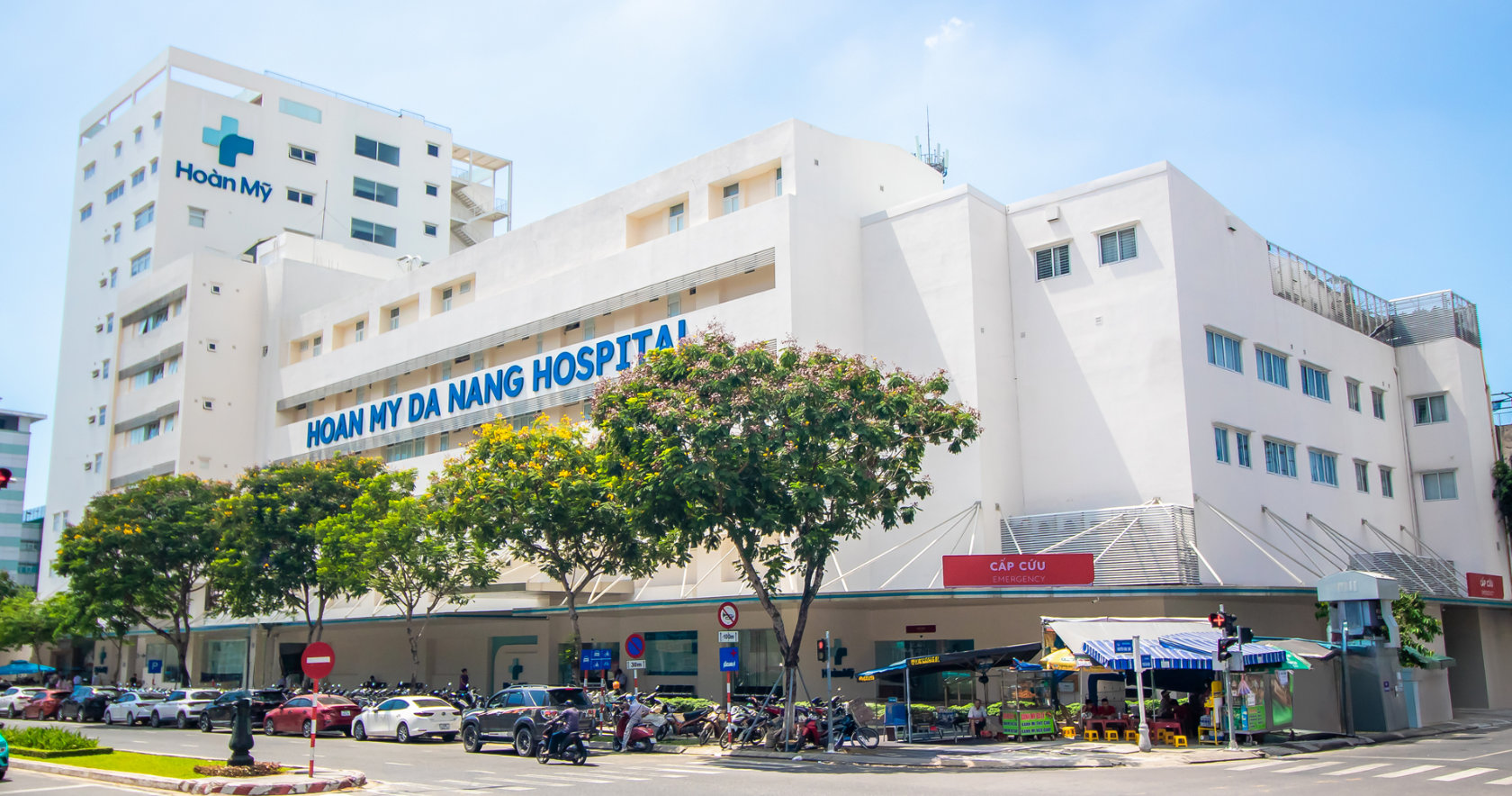
Doctors at Hoan My Da Nang Hospital have successfully performed a life-saving coronary intervention on a 38-year-old Indian male tourist who suffered an acute myocardial infarction caused by complete occlusion of the left anterior descending (LAD) artery – one of the most critical coronary arteries supplying the heart. This case highlights the importance of early detection and timely intervention during the “golden window” of myocardial infarction.
Symptom Onset and Timely Access to Medical Care
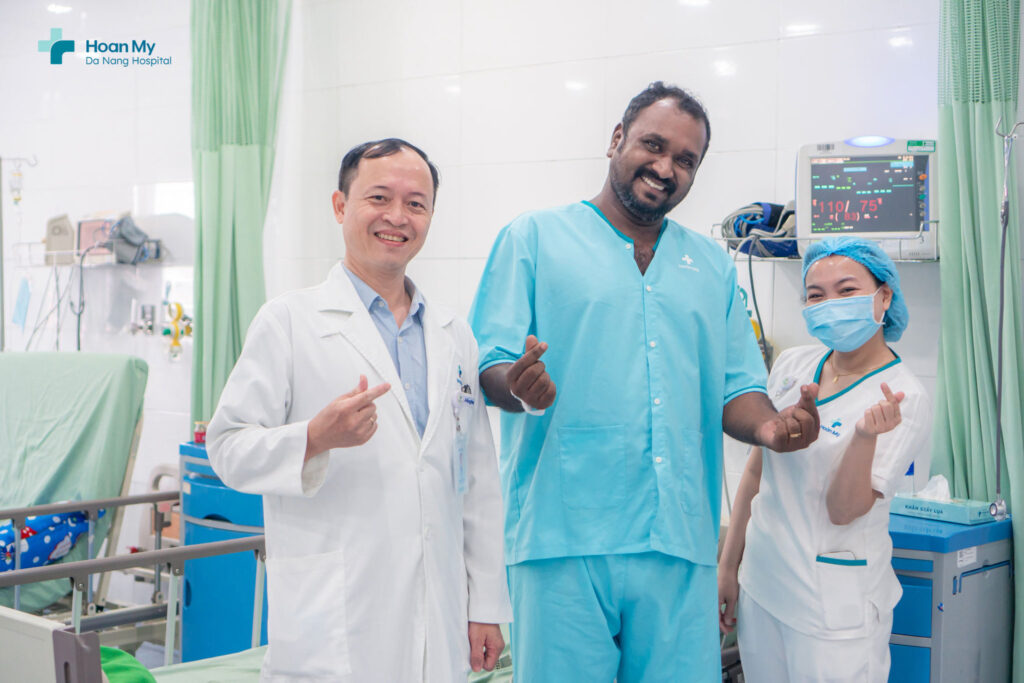
The patient, M.R.K. (38 years old, Indian nationality), suddenly experienced severe chest pain radiating to the back, accompanied by shortness of breath and marked fatigue while traveling in Da Nang City. He was promptly brought to the Emergency Department of Hoan My Da Nang Hospital.
At the hospital, the patient underwent a clinical examination and necessary diagnostic tests to rule out other causes such as acute pancreatitis or aortic dissection. Notably, cardiac enzyme testing one hour after admission revealed a sharp increase in troponin levels from 2.2 to 47.1 ng/mL, a key biomarker indicating acute myocardial injury.
Definitive Diagnosis and Prompt Coronary Intervention
The patient was diagnosed with non–ST-segment elevation myocardial infarction (NSTEMI). He was immediately indicated for coronary angiography using Digital Subtraction Angiography (DSA). The angiographic results showed complete occlusion of the proximal segment of the left anterior descending artery, identified as the direct cause of acute myocardial ischemia.
The medical team promptly performed coronary stent placement to restore blood flow, re-establish myocardial perfusion, and then transferred the patient to the Cardiology Department for continued intensive care.
According to MSc, MD Nguyen Hong Nam, Department of Cardiology, Hoan My Da Nang Hospital, the intervention was carried out within the “golden window” of the first 3 hours after symptom onset, helping preserve cardiac function and significantly reduce the risk of complications and mortality.
Favorable Prognosis Thanks to Early Intervention
After four days of treatment, the patient’s clinical condition improved markedly. He was free from chest pain, vital signs were stable, appetite returned to normal, and he met the criteria for discharge to return to his home country.
Acute myocardial infarction is a life-threatening medical emergency that requires early diagnosis and prompt intervention to reduce the risk of death and long-term complications such as heart failure. The case of patient M.R.K. underscores the critical importance of early symptom recognition, timely access to medical care, and the readiness of medical expertise and advanced equipment at healthcare facilities. Dr. Nam advises that any abnormal symptoms such as chest pain, shortness of breath, or chest discomfort should never be ignored, and patients should seek immediate medical attention at the nearest hospital.
Currently, coronary intervention remains the most effective treatment for myocardial infarction caused by coronary artery occlusion, offering multiple advantages including no need for general anesthesia, minimal invasiveness, a short hospital stay of 3–4 days, a high success rate, rare complications, and rapid recovery.
Hoan My Da Nang Hospital has been actively applying coronary interventions in the treatment of acute myocardial infarction, successfully saving the lives of many patients, including both local residents and domestic and international tourists.
Share
Hoan My Hospital Network
Hoan My Da Nang Hospital
Address: 291 Nguyen Van Linh Street, Thanh Khe Ward, Da Nang City
phone: 0236 3650 676
email: [email protected]
As hemorrhoidal disease becomes increasingly common, many patients are seeking treatment options that are effective, safe, and allow for rapid recovery. At Hoan My Da Nang Hospital, laser hemorrhoid surgery has been adopted as a minimally invasive method that helps shorten recovery time for patients.
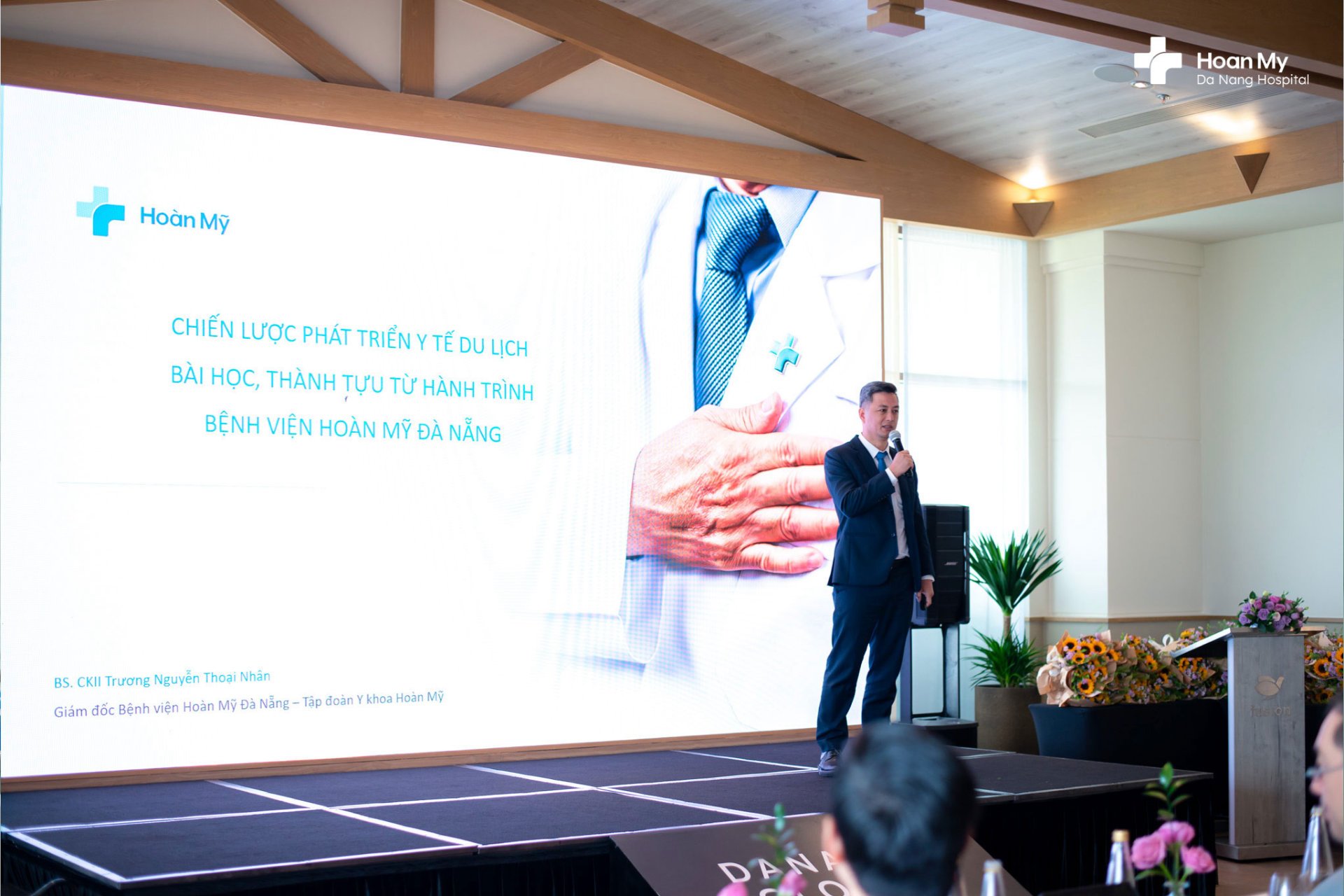
Within the Da Nang Medical Tourism Conference 2025, Hoan My Da Nang Hospital participated as one of the pioneering healthcare institutions in the field of medical tourism in Central Vietnam. The conference brought together experts, policymakers, tourism enterprises, and domestic and international healthcare providers to discuss strategic directions for the development of medical tourism, with […]
A special surgical case was recently successfully performed by the Obstetrics and Gynecology Department of Hoan My Da Nang Hospital for a female patient of South African nationality suffering from large endometriosis accompanied by large uterine fibroids. The condition had caused prolonged pain and significantly affected her quality of life. A Complex Case with Multiple […]
January 4, 2026 marks the 24-year journey of establishment and development of Hoan My Da Nang Hospital, one of the pioneering private hospitals in Vietnam’s Central region. Over nearly a quarter of a century, the hospital has steadily built a high-quality healthcare model with patients at its core. Building A Sustainable Healthcare Foundation Established in […]
By clicking "Accept All", you consent to the storage of cookies on your device to enhance site navigation, analyze site usage, and assist in our marketing efforts.










 60-60A Phan Xich Long Street, Cau Kieu Ward, Ho Chi Minh City
 Open 24 hours
 27 Ky Dong Street, Nhieu Loc Ward, Ho Chi Minh City
 Monday to Saturday: 07:30 – 17:00
 18 Binh Duong Boulevard, Binh Hoa Ward, Ho Chi Minh City
 Monday to Saturday 07:30 - 16:30
 F99 Vo Thi Sau Street, Tran Bien Ward, Dong Nai province
 Open 24 hours